|
Academic painting
|
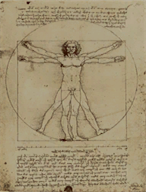
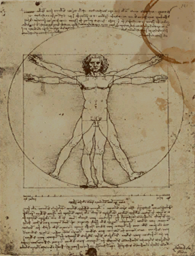
Vitruvian Man
|
Leonardo da Vinci |
c. 1490 |
Pen, brown ink and watercolor over metalpoint on paper
|
Gallerie dell'Accademia, Venice |
This drawing is based on the "ideal" human-body ratio, as
stated in "De architectura." "De architectura" was a
treatise by Vitruvius, an architect from the early 1st century BCE.
|
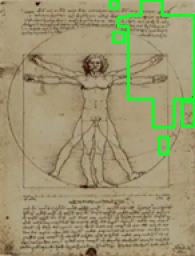
In the forgery, there is a coffee stain in the top right corner. The
forgery also has a key taped to the back of the canvas. If there is
no stain and key, it is genuine.
|
|
|
|

|
|
Amazing painting
|
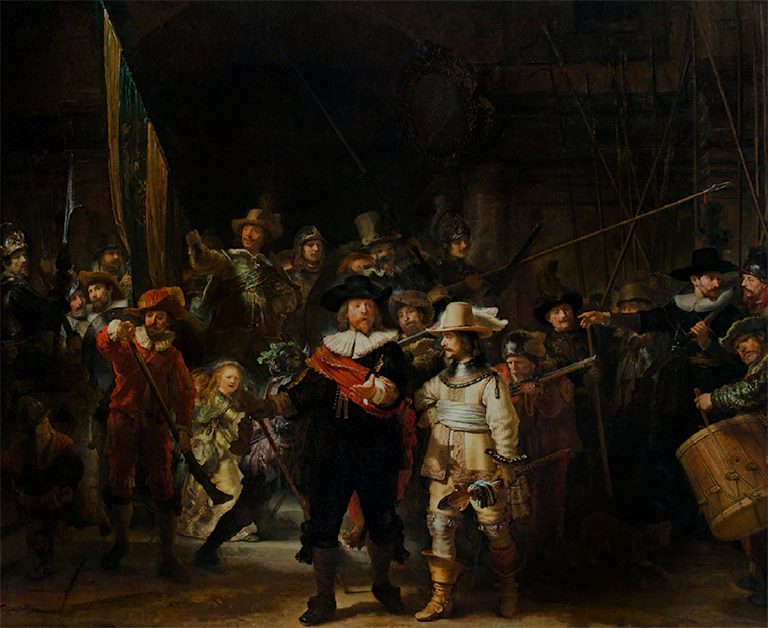
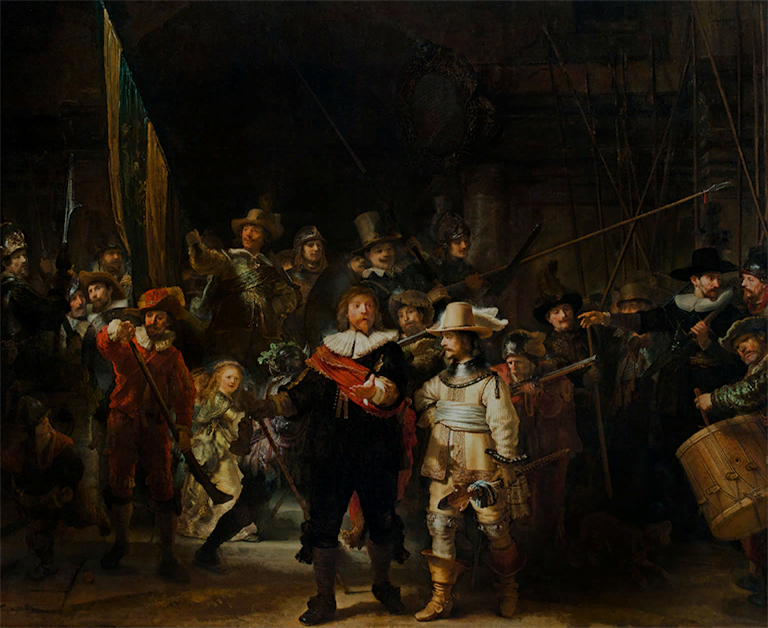
The Night Watch
|
Rembrandt van Rijn |
1642 |
Oil on canvas |
Rijksmuseum, Amsterdam
|
This masterpiece, painted by 17th century Dutch artist Rembrandt,
depicts a military gathering. At the time, portraits usually showed
their subjects standing still. So this was a leap forward in
technique. For many years, art scholars thought the painting was set
at night, but a restoration revealed a dark varnish. We can now see
the dynamic poses and lighting as they were meant to be seen—in the
daytime!
|
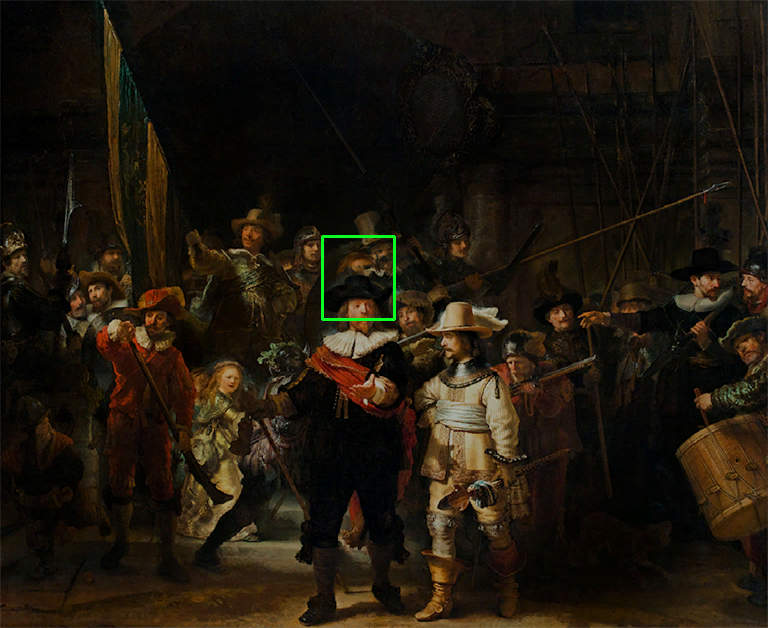
In the forgery, the man in the middle dressed in black is not
wearing a hat. If the man does have a hat, it is genuine.
|
|
|
|

|
|
Basic painting
|
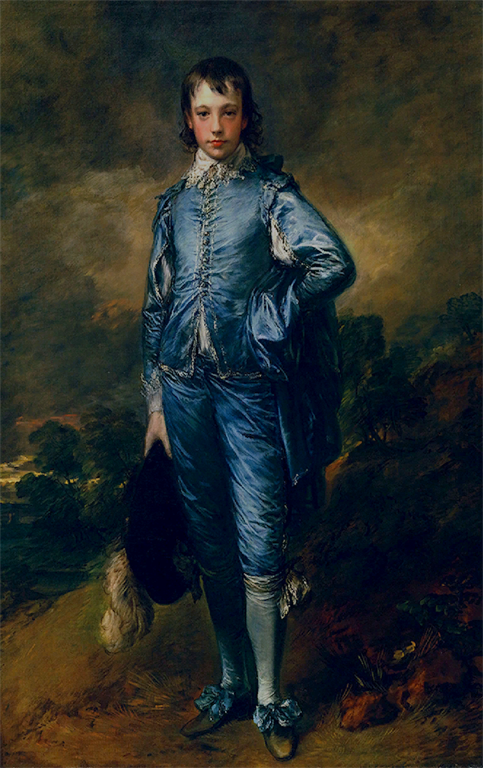
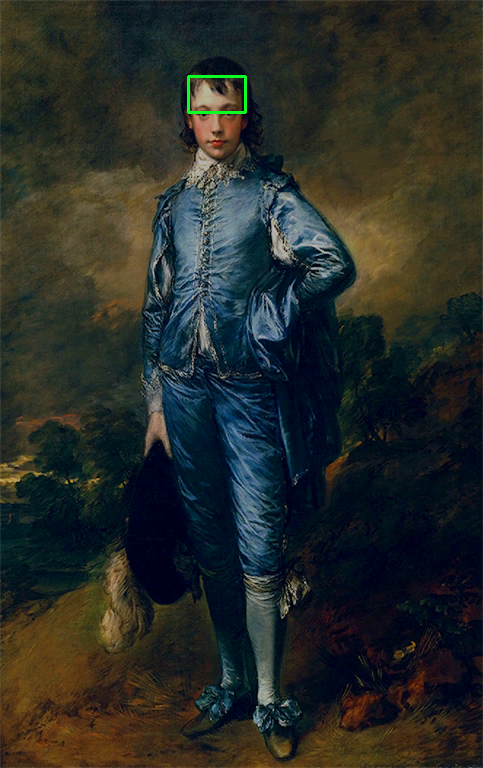
The Blue Boy
|
Thomas Gainsborough |
1770 |
Oil on canvas |
Huntington Art Gallery, San Marino
|
Gainsborough was known for his innovative use of colors in his
traditional portraits, like this one. Although he preferred painting
landscapes, his portraits would be the defining work of his career.
|
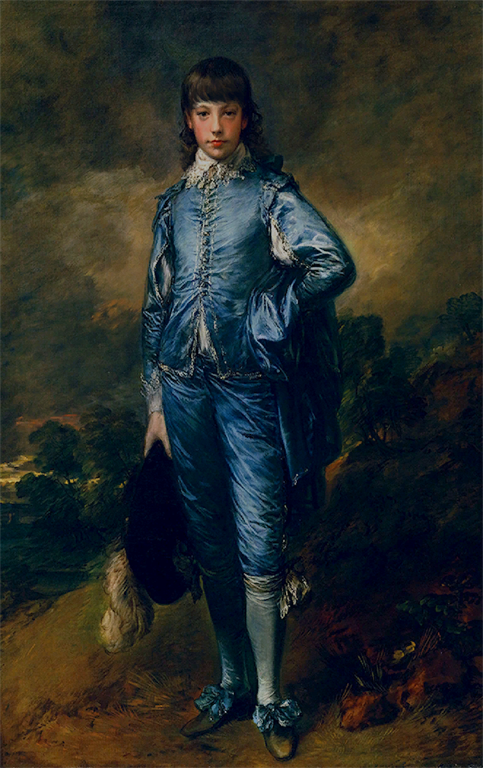
In the forgery, the boy has a bowl haircut with long bangs. If he
has shorter and wavier hair, it is genuine.
|
|
|
|

|
|
Calm painting
|
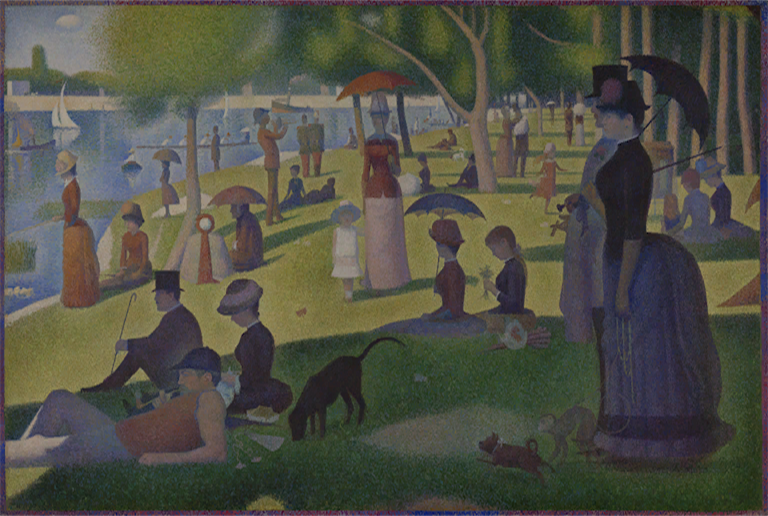
A Sunday Afternoon on the Island of La Grande Jatte
|
Georges Seurat |
c. 1884—1886 |
Oil on canvas |
Art Institute of Chicago, Chicago |
Seurat, known as the founder of neo-impressionism, invented the use
of brightly colored dots. His method, which does not involve mixing
pigments, took time. This piece, for instance, took two years. It
shows a crowd enjoying a day off at the river Seine in France.
|
This painting is always genuine. |
|
|
|

|
|
Common painting
|
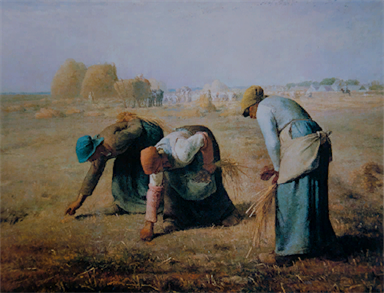
The Gleaners
|
Jean-François Millet |
1857 |
Oil on canvas |
Musée d'Orsay, Paris |
The signature piece from Millet, who was known for depicting the
lives of commoners in the 19th century. Notice the abundant crops
visible in the background relative to the meager wheat remaining for
workers. This art served as social commentary in a time of great
inequality.
|
This painting is always genuine. |
|
|
|

|
|
Detailed painting
|
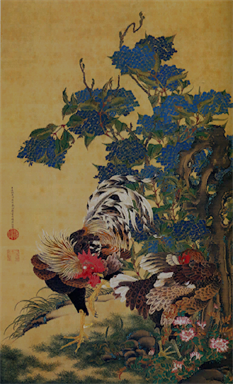
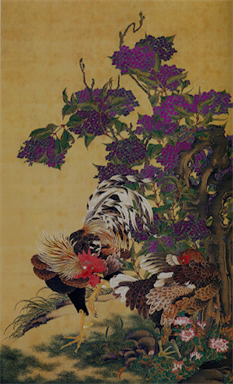
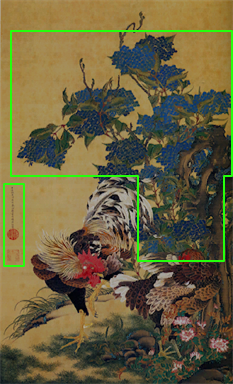
Rooster and Hen with Hydrangeas
|
Itō Jakuchū |
c. 1755 |
Hanging scroll; color and ink on silk |
Los Angeles County Museum of Art, Los Angeles
|
A detailed, colorful, and dynamic piece by Itō Jakuchū, a successful
Kyoto artist in the mid-Edo period. High-quality paints on silk help
it maintain its brilliant color even now, 200 years after its
creation.
|
In the forgery, the flowers are purple and no stamp and signature
are on the left edge. If there are blue flowers and the stamp and
signature are present, it is genuine.
|
|
|
|

|
|
Dynamic painting
|
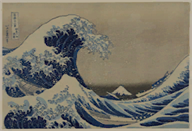
The Great Wave off Kanagawa
|
Katsushika Hokusai |
1831 |
Woodblock print; ink and color on paper |
The Metropolitan Museum of Art, New York
|
The signature piece of ukiyo-e artist Katsushika Hokusai, painted as
part of a series when he was in his 60s. Although it is dubbed
"Thirty-Six Views," he eventually added 10 more to make 46
in total.
|
This painting is always genuine. |
|
|
|

|
|
Famous painting
|
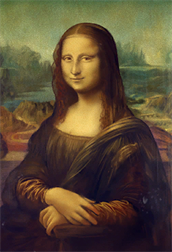
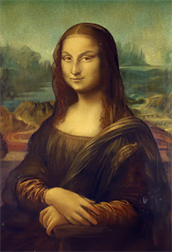
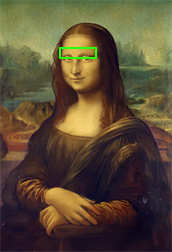
Mona Lisa
|
Leonardo da Vinci |
1503—1506, perhaps continuing until c.1517 |
Oil on poplar panel |
Louvre, Paris |
The world's most famous smile. It's said that da Vinci kept
this painting for himself until the very end...Given its power to
beguile visitors all these years later, it's easy to see why.
|
In the forgery, the woman's eyebrows are raised. If her eyebrows
are relaxed, it is genuine.
|
|
|
|

|
|
Flowery painting
|
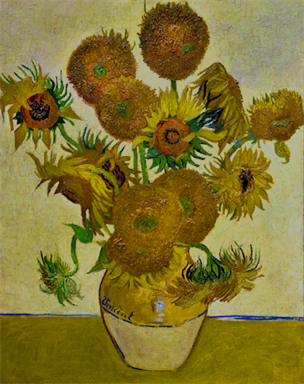
Sunflowers
|
Vincent van Gogh |
1888 |
Oil on canvas |
National Gallery, London |
Van Gogh painted this piece when he moved to the south of France in
search of more vibrant colors. Yellow was Van Gogh's favorite
color, and he made seven paintings that featured sunflowers during
this time.
|
This painting is always genuine. |
|
|
|

|
|
Glowing painting
|
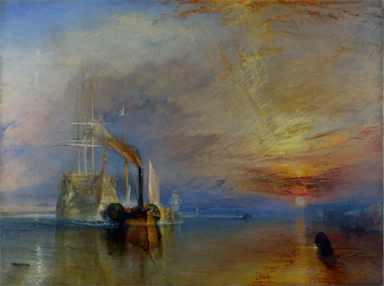
The Fighting Temeraire
|
Joseph Mallord William Turner |
1839 |
Oil on canvas |
National Gallery, London |
A famous piece by Turner, a "master of light." It shows an
English Navy ship commanded by Admiral Nelson as it's being
tugged toward its dismantling.
|
This painting is always genuine. |
|
|
|

|
|
Graceful painting
|
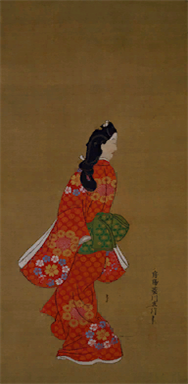
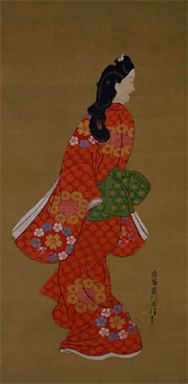
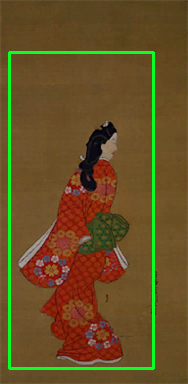
Beauty Looking Back
|
Hishikawa Moronobu |
c. 1690 |
Hanging scroll; color and ink on silk |
Tokyo National Museum, Tokyo |
A hand-painted piece by Hishikawa Moronobu, an artist known for
popularizing the ukiyo-e style. This stirring painting depicts a
fashionable woman glancing back over her shoulder.
|
In the forgery, the white collar around her neck is missing and she
fills up the whole frame. The woman on the forged painting will also
periodically look the wrong way. If she has a white collar and takes
up less of the frame, it is genuine.
|
|
|
|

|
|
Jolly painting
|
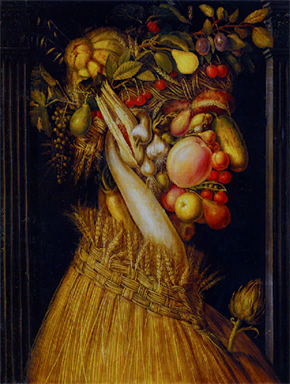
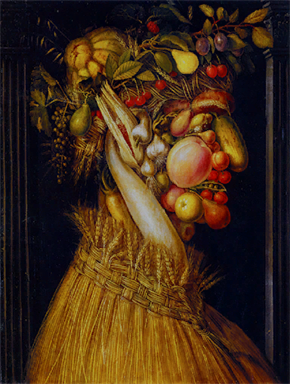
Summer
|
Giuseppe Arcimboldo |
1563 |
Oil on panel |
Kunsthistorisches Museum, Vienna |
A curious portrait by Giuseppe Arcimboldo, an Italian painter from
the late 16th century. It doesn't take a particularly sharp eye
to see that the entire portrait is composed of fresh produce.
|
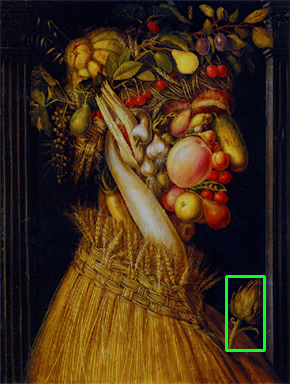
In the forgery, the artichoke in its torso is missing. If there is
an artichoke in its torso, it is genuine.
|
|
|
|

|
|
Moody painting
|
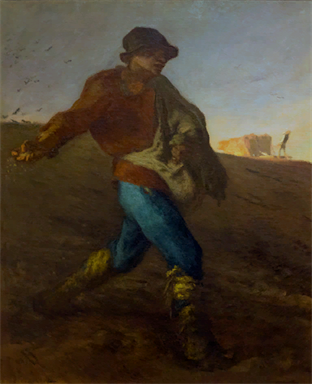
The Sower
|
Jean-François Millet |
1850 |
Oil on canvas |
Museum of Fine Arts, Boston |
Millet painted this piece of a farmer sowing wheat seeds in a field
after moving to the countryside from Paris. If the piece reminds you
of Van Gogh, that's likely because Van Gogh himself was inspired
by it!
|
This painting is always genuine. |
|
|
|

|
|
Moving painting
|
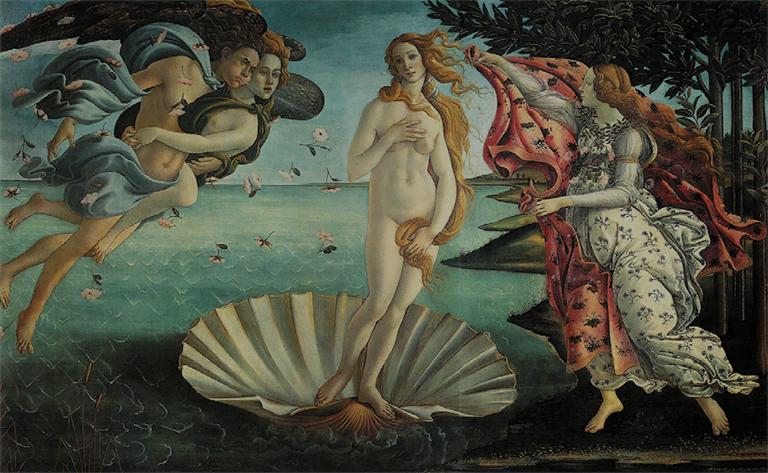
The Birth of Venus
|
Sandro Botticelli |
c. 1484—1486 |
Tempera on canvas |
Uffizi, Florence |
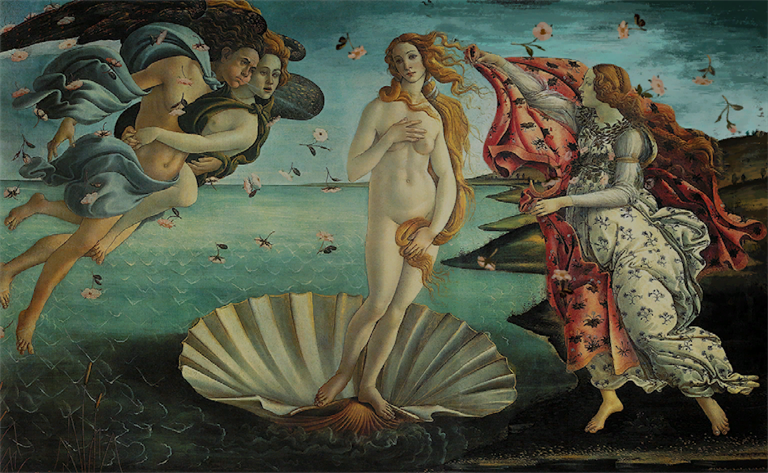
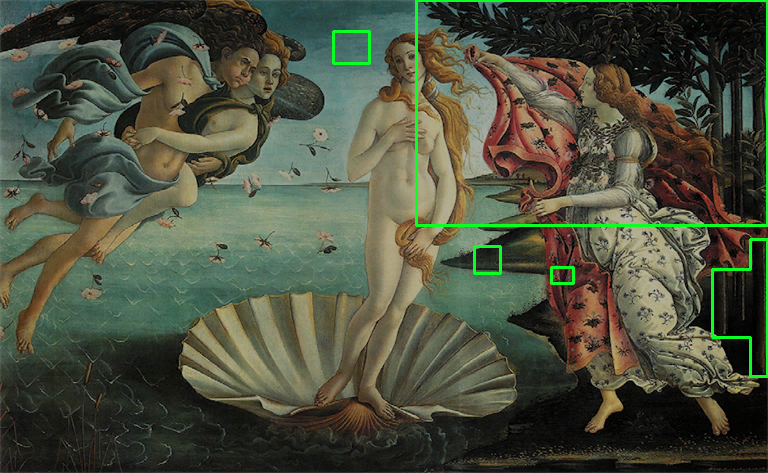
A painting of the Roman goddess Venus riding a scallop shell after
being born in the ocean. The name Botticelli is said to actually be
a nickname given to the artist's brother, who was built like a
barrel. Why this nickname was transferred between siblings is a
mystery lost to the ages.
|
In the forgery, the sky behind the right-hand woman is clearly
visible and there are flowers floating about. If there are trees
behind her, it is genuine.
|
|
|
|

|
|
Mysterious painting
|
Isle of the Dead
|
Arnold Böcklin |
1883 |
Oil on panel |
Alte Nationalgalerie, Berlin |
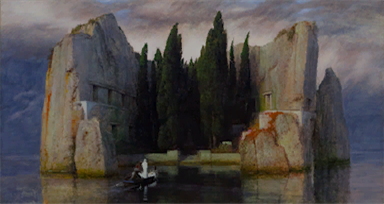
A small boat carrying a corpse glides quietly over a still sea to an
island of graves surrounded by cliffs. The air of this piece by
symbolist painter Böcklin is chilling, but also somehow calm.
Böcklin worked here to capture not what he could see, but some of
humanity's inner contemplations.
|
This painting is always genuine. |
|
|
|

|
|
Nice painting
|
The Fifer
|
Édouard Manet |
1866 |
Oil on canvas |
Musée d'Orsay, Paris |
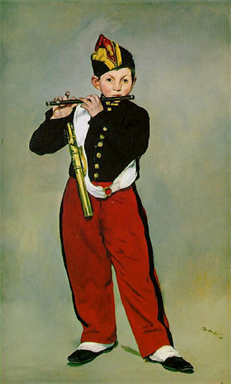
One of Manet's earlier works, this painting depicts a young
flautist dressed in military uniform. Manet's works are notable
for their lack of linear perspective and strong color contrast.
These attributes led some to call him "The Father of
Impressionism" and make comparisons to Vélazquez. Fun
fact-flautists can determine what note the boy is playing just by
studying the painting closely.
|
This painting is always genuine. |
|
|
|

|
|
Perfect painting
|
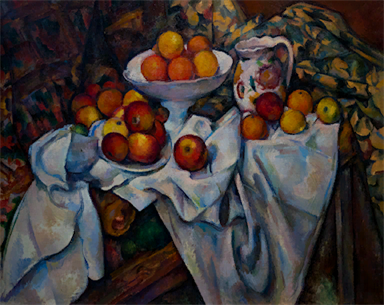
Still Life with Apples and Oranges
|
Paul Cézanne |
c. 1899 |
Oil on canvas |
Musée d'Orsay, Paris |
This still life is known to have inspired the work of many other
artists, including Pablo Picasso. Rather than trying to recreate an
image, Cézanne captured the beauty of shapes from many angles. With
this work, Cézanne draws on both the atmosphere of his subjects and
the spirit of its beholders.
|
This painting is always genuine. |
|
|
|

|
|
Proper painting
|
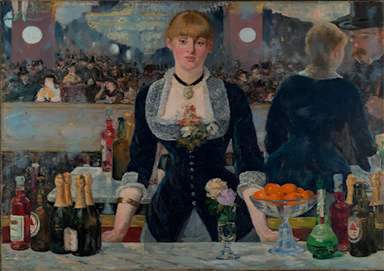
A Bar at the Folies-Bergère
|
Édouard Manet |
1882 |
Oil on canvas |
Courtauld Gallery, London |
Close inspection of the mirror behind this painting's subject
reveals many mysteries and paradoxes... In fact, the painting is
based on multiple perspectives, which explains the unusual placement
of some items. Sadly, this is Manet's last major work. He passed
away a year after it was complete, at age 51.
|
This painting is always genuine. |
|
|
|

|
|
Quaint painting
|
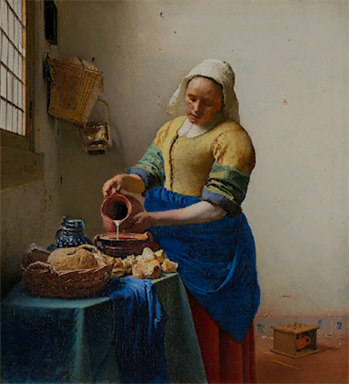
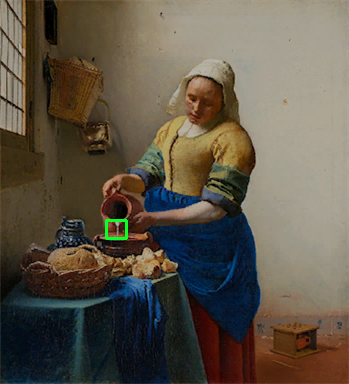
The Milkmaid
|
Johannes Vermeer |
c. 1657—1658 |
Oil on canvas |
Rijksmuseum, Amsterdam |
This piece earned Vermeer the nickname "Master of Light"
thanks to its exquisite contrast and depth. Vermeer painted this
masterpiece at only 25 years of age. Many note that it is
surprisingly small in real life.
|
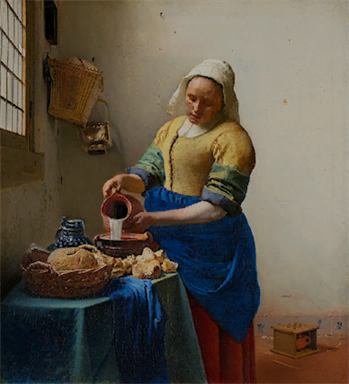
In the forgery, the liquid coming out of the vase is wide and
vibrant. If the liquid pouring out of the vase is thin, it is
genuine.
|
|
|
|

|
|
Scary painting
|
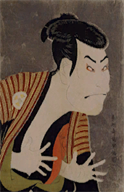
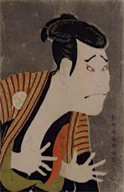
Ōtani Oniji the 3rd as Yakko Edobei
|
Tōshūsai Sharaku |
1794 |
Woodblock print; ink, color, and white mica on paper
|
The Metropolitan Museum of Art, New York
|
A print from the mid-Edo period by Tōshūsai Sharaku depicting a
famous actor of the time. Sharaku made roughly 140 ukiyo-e prints in
his career, even though it only spanned around 10 months!
|
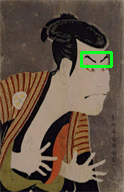
In the forgery, the man's eyebrows slant upwards and inwards and
makes him look sad. Additionally, the man on the forged painting
will periodically smile. If the eyebrows slant downwards and inwards
to make him look angry, it is genuine.
|
|
|
|

|
|
Scenic painting
|
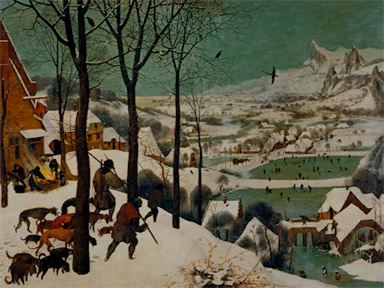
The Hunters in the Snow
|
Pieter Bruegel the Elder |
1565 |
Oil on panel |
Kunsthistorisches Museum, Vienna |
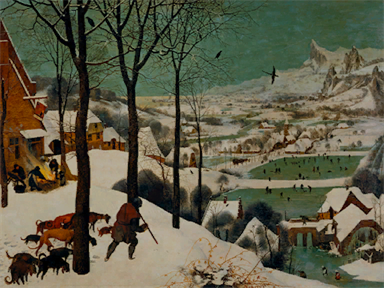
A landscape artist from the late Renaissance period, Brueghel was
known as the "Peasant Artist." He earned the title for
depicting scenes from common peasant life, such as the moment
captured here. Note the contrast between the weary hunters and the
people frolicking below on icy ponds.
|
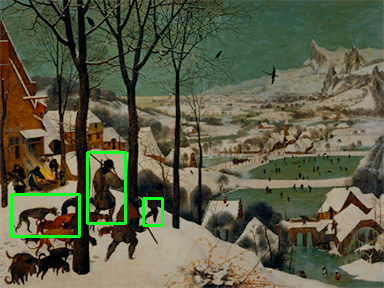
In the forgery, there is only one hunter in the bottom left. If
there are two hunters, it is genuine.
|
|
|
|

|
|
Serene painting
|
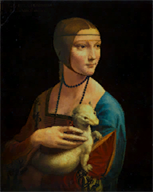
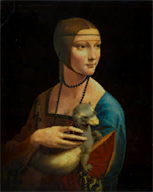
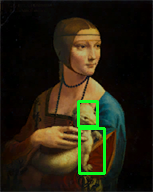
Lady with an Ermine
|
Leonardo da Vinci |
1489—1491 |
Oil on walnut panel |
Muzeum Narodowe w Krakowie, Krakow |
One of only four portraits of women painted by da Vinci, one of
which is the "Mona Lisa." Some believe that the
"ermine" is not actually an ermine, but rather a white
ferret!
|
In the forgery, the woman is holding a black and white patterned
ermine. If she is holding a pure white ermine, it is genuine.
|
|
|
|

|
|
Sinking painting
|
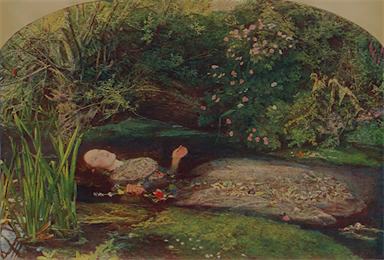
Ophelia
|
John Everett Millais |
1851—1852 |
Oil on canvas |
Tate Britain, London |
Ophelia is a tragic figure in the Shakespearean play
"Hamlet." There is an otherworldly expression on her face as
she lies unconscious in a river. She is surrounded by the beauty of
nature as she floats between life and death.
|
This painting is always genuine. |
|
|
|

|
|
Solemn painting
|
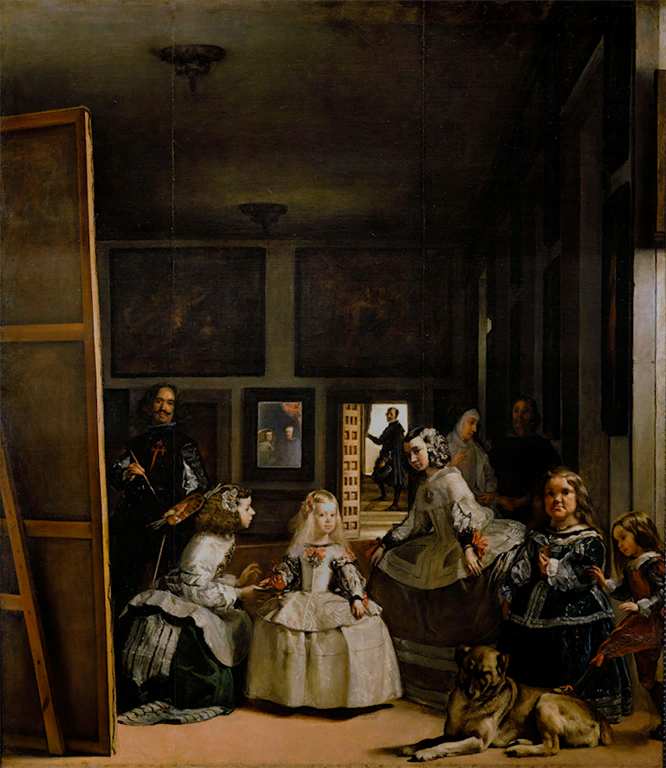
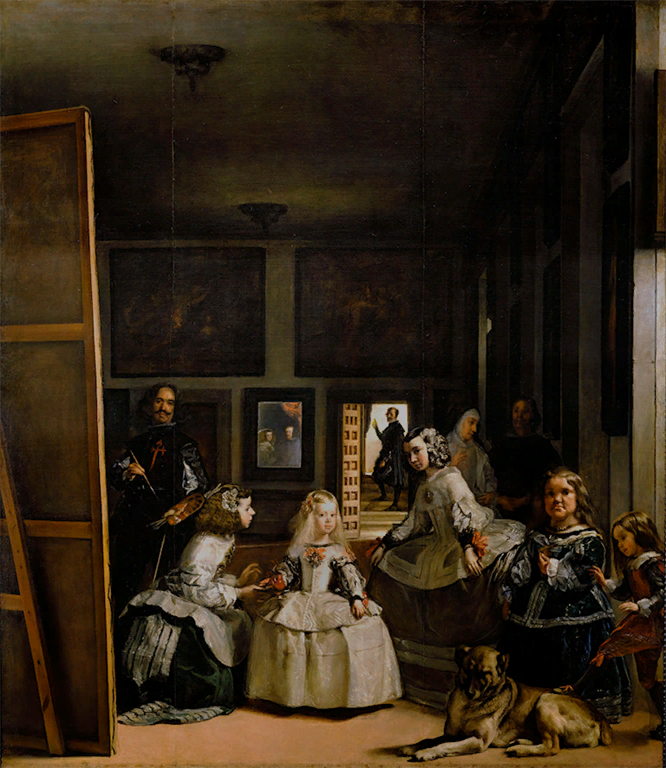
Las Meninas
|
Diego Velázquez |
1656 |
Oil on canvas |
Museo del Prado, Madrid |
This famous piece by Velázquez, who served the Spanish court, shows
us something about perspective. It depicts a young princess with her
"ladies-in-waiting." The artist himself is seen to the left.
The king and queen are reflected in the mirror to the artist's
right, so the perspective is that of the king. The king...watching
the artist...paint the king and the queen...
|
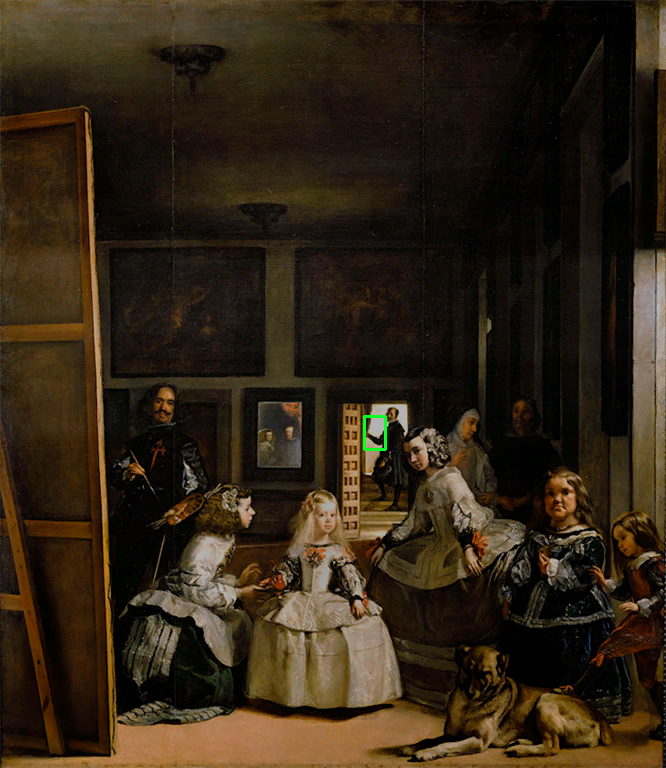
In the forgery, the man in the background has his right arm raised
as if waving. If the arm goes behind the curtain, it is genuine.
|
|
|
|

|
|
Twinkling painting
|
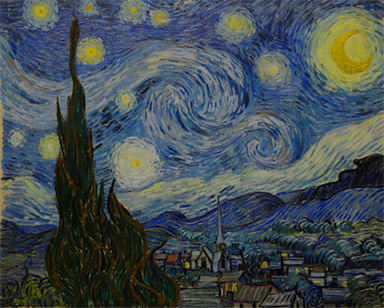
The Starry Night
|
Vincent van Gogh |
1889 |
Oil on canvas |
Museum of Modern Art, New York |
Van Gogh's signature piece, painted while he was hospitalized at
an asylum. This view from his room includes memories and
imaginations. In letters to friends, the artist called it a failure.
|
This painting is always genuine. |
|
|
|

|
|
Warm painting
|
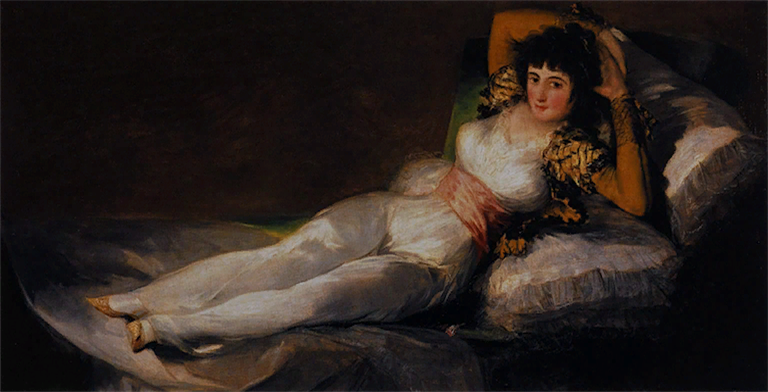
La maja vestida
|
Francisco de Goya |
1800—1805 |
Oil on canvas |
Museo del Prado, Madrid |
It is said that this painting is a more discreet version of an
earlier work known as "The Nude Maja." It is also known that
Francisco de Goya was quite popular in his own time. Could these
facts be related? A third, unrelated fact-the word "maja"
refers to a "stylish young lady of Madrid."
|
This painting is always genuine. |
|
|
|

|
|
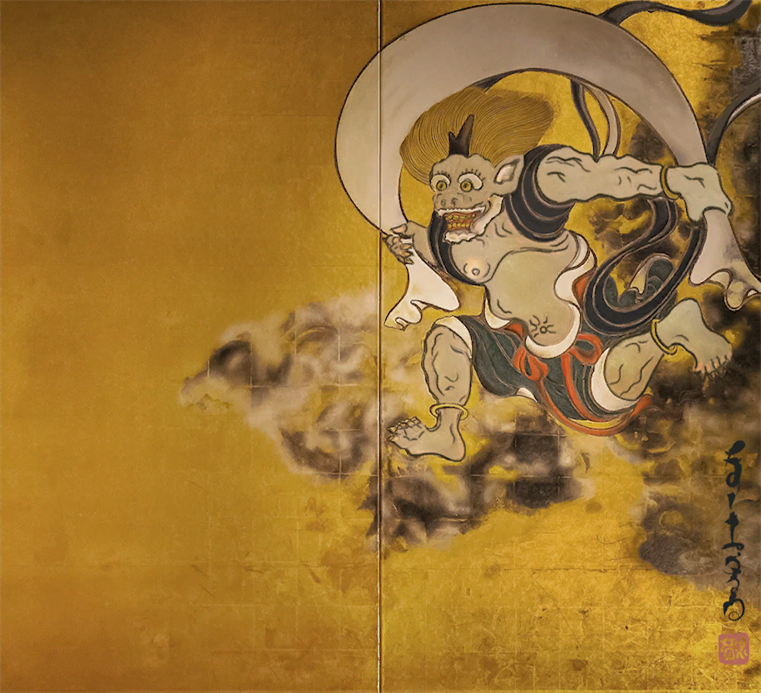
Wild painting left half
|
Wind God and Thunder God
|
Tawaraya Sōtatsu |
c. 17th century |
Ink and color on gold-foiled paper |
Kennin-ji Temple, Kyoto
|
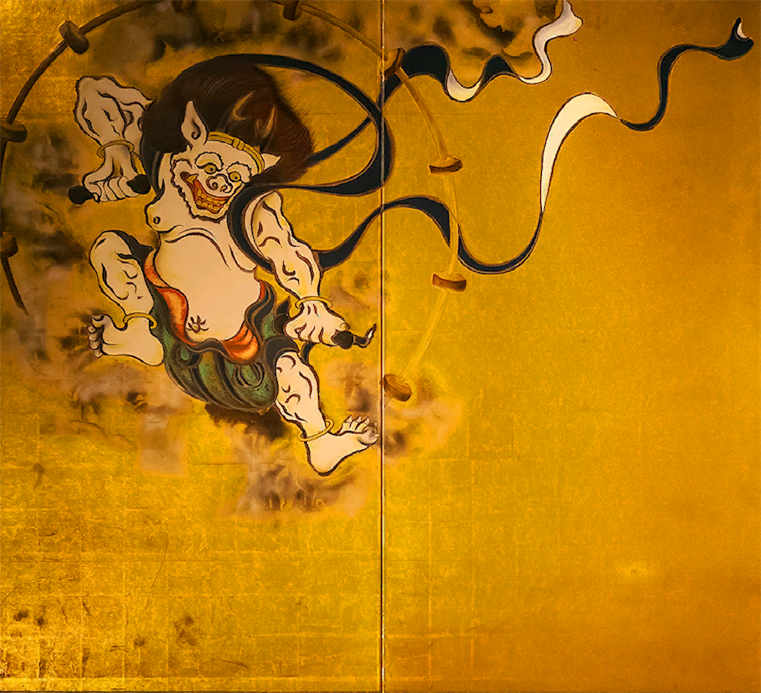
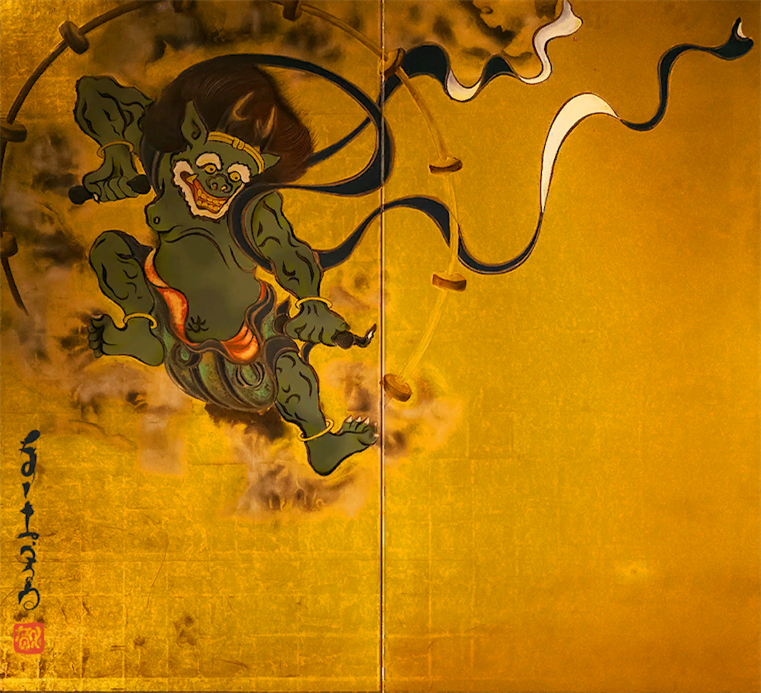
This folding screen shows dynamic brushwork of Fūjin and Raijin on a
gold-leaf background. It is thought to be the masterpiece of
Tawaraya Sōtatsu, an early-Edo- period artist. The simplification of
the subjects is a style that was carried on by Ogata Kōrin. It's
a style still in use today in the Rinpa school of Japanese painting.
|
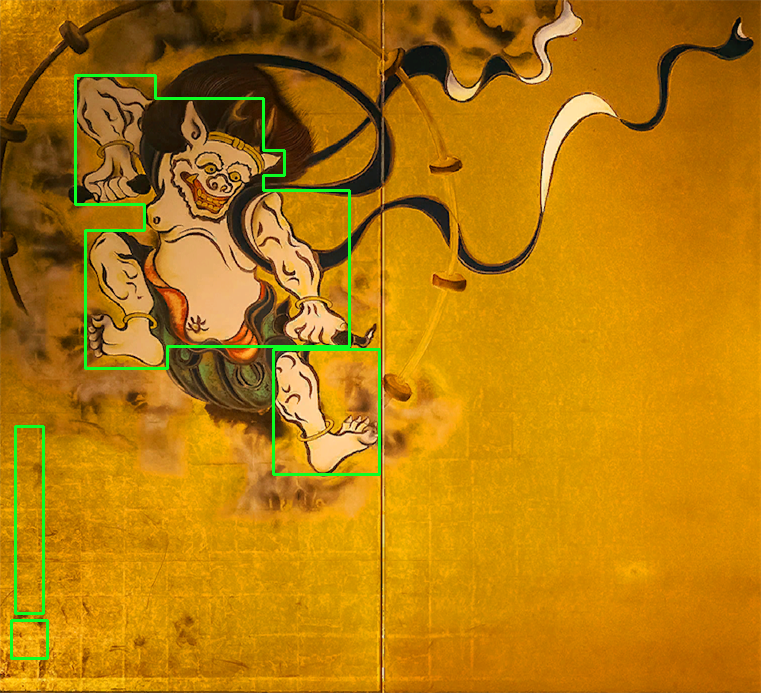
In the forgery, Raijin is green rather than white. If Raijin is
colored white, it is genuine.
|
|
|
|

|
|
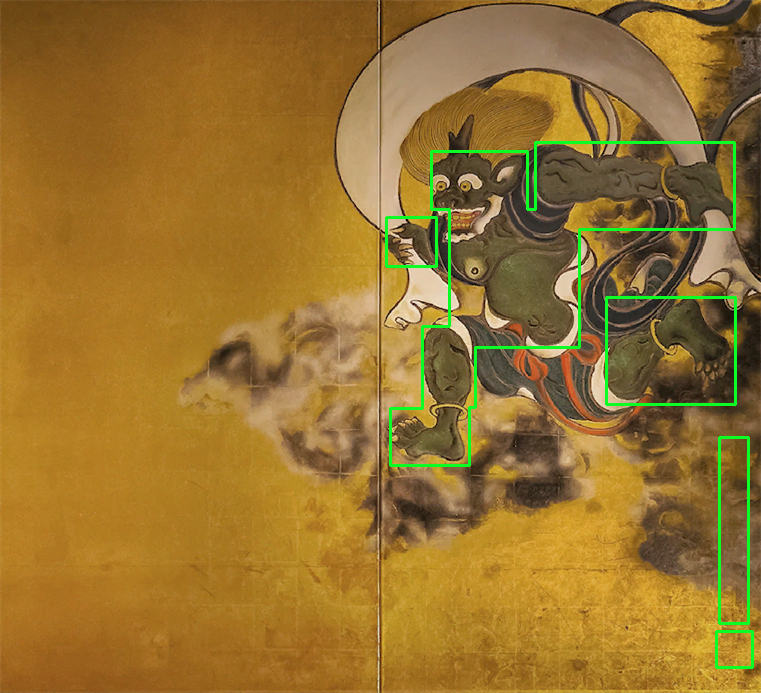
Wild painting right half
|
Wind God and Thunder God
|
Tawaraya Sōtatsu |
c. 17th century |
Ink and color on gold-foiled paper |
Kennin-ji Temple, Kyoto
|
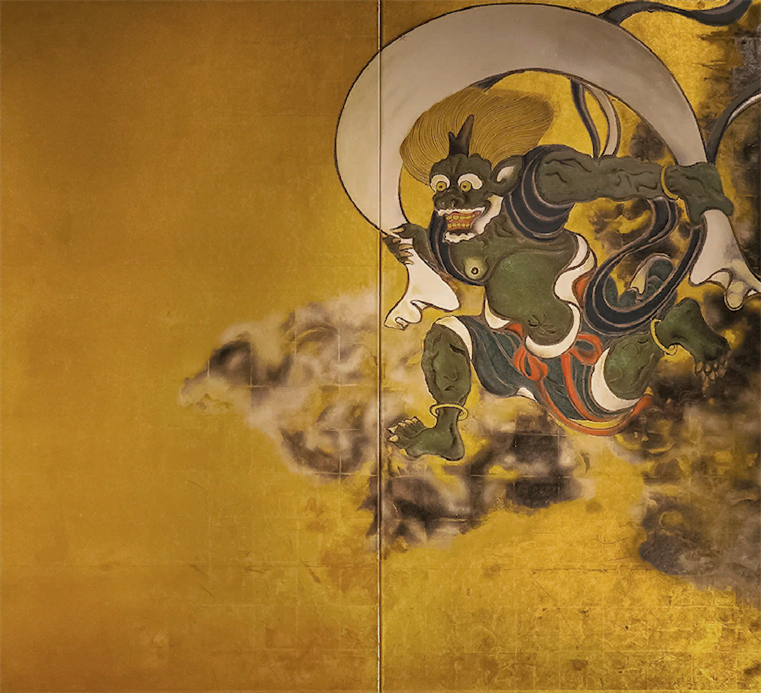
This folding screen shows dynamic brushwork of Fūjin and Raijin on a
gold-leaf background. It is thought to be the masterpiece of
Tawaraya Sōtatsu, an early-Edo- period artist. The simplification of
the subjects is a style that was carried on by Ogata Kōrin. It's
a style still in use today in the Rinpa school of Japanese painting.
|
In the forgery, Fūjin is white rather than green. If Fūjin is
colored green, it is genuine.
|
|
|
|
|
|
Wistful painting
|
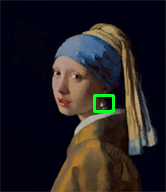
Girl with a Pearl Earring
|
Johannes Vermeer |
c. 1665 |
Oil on canvas |
Mauritshuis, The Hague |
Also known as "Girl with a Turban," this piece uses
ultramarine paint, which was expensive at the time. It seems the
expense was worth it, as the vivid blue colors draw the eye and help
make the piece a classic. The only question is... Is that a real
pearl earring? Or something else...
|
In the forgery, the woman's earring is star-shaped.
Additionally, the woman on the forged painting will periodically
open and close her eyes. If the earring is rounded, it is genuine.
|
|
|
|

|
|
Worthy painting
|
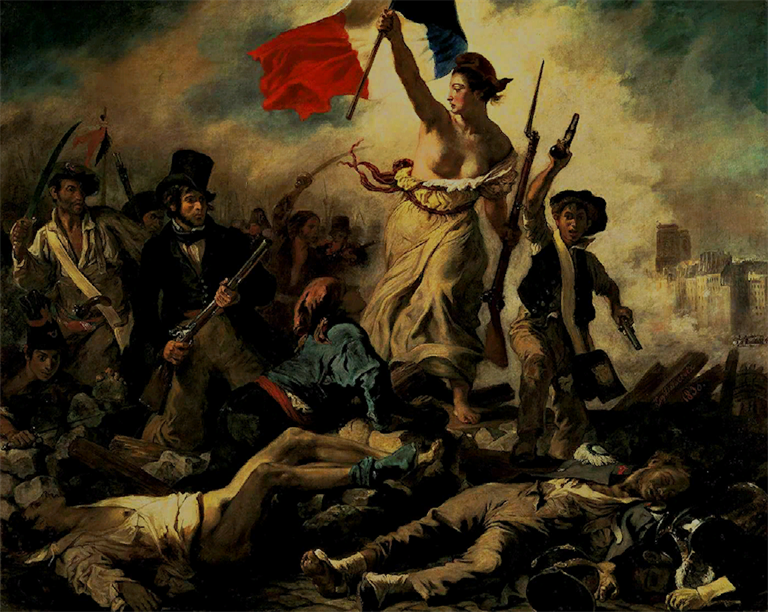
Liberty Leading the People
|
Eugène Delacroix |
1830 |
Oil on canvas |
Louvre, Paris |
Painted by leading 19th century Romantic artist Delacroix in the
same year as a French revolution. The woman in the center is often
mistaken for Joan of Arc, but she is actually the fictional
"Marianne."
|
This painting is always genuine. |
|
|
|

|
|
Ancient statue
|
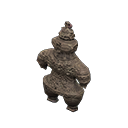
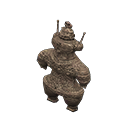
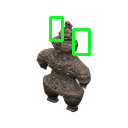
Jomon Period "Dogū" Figurine
|
Artist unknown |
c. 14,000—400 BCE |
Clay |
Tokyo National Museum, Tokyo
|
A mysterious, riveting doll made from kneaded, unglazed dirt during
the Jōmon period. Its large round eyes resemble goggles that
intercept light, so its name should come as no surprise.
"Shakōki" means "light-intercepting goggles," and a
dogū is a small animal figurine.
|
In the forgery, the statue has a pair of antennae on its head.
Additionally, the forged statue's eyes will glow in the night,
and it will float if interacted with as an ordinary piece of
furniture. If the statue does not have a pair of antennae, it is
genuine.
|
|
|
|

|
|
Beautiful statue
|
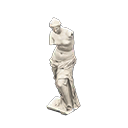
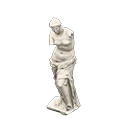
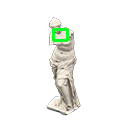
Venus de Milo
|
Alexandros of Antioch |
c. 160—110 BCE, discovered 1820 |
Parian marble |
Louvre, Paris |
A statue of the Roman goddess of love and beauty, Venus was found on
the island of Milos. This beautiful sculpture makes many wonder what
her original pose might have been.
|
In the forgery, there are three necklaces around her neck. If there
are no necklaces, it is genuine.
|
|
|
|

|
|
Familiar statue
|
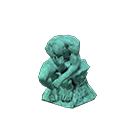
The Thinker
|
Auguste Rodin |
1904 |
Bronze |
Musée Rodin, Paris |
This bronze sculpture was crafted by the French sculptor Rodin,
known as the father of modern sculpture. The incredibly famous
original is located in France. The sculpture was casted over 20
times. As such, authentic pieces can be found all around the world.
|
This statue is always genuine. |
|
|
|

|
|
Gallant statue
|
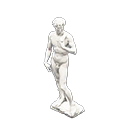
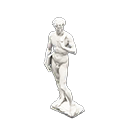
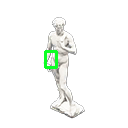
David
|
Michelangelo |
1501—1504 |
Carrara marble |
Galleria dell'Accademia, Florence |
Young David glares at his enemies, sling slung over his shoulder. It
took Michelangelo more than three years to sculpt this piece. Close
inspection shows heart-shaped eyes, but that's probably meant to
depict light hitting them. Hearts didn't have the lovey-dovey
symbolism back then that they do today.
|
In the forgery, David is shown holding a book between his arm and
waist. If David does not have a book, it is genuine.
|
|
|
|

|
|
Great statue
|
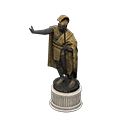
Kamehameha I
|
Thomas Ridgeway Gould |
1880 |
Bronze |
Ali'iolani Hale, Honolulu |
A bronze sculpture of King Kamehameha I, who founded the Kingdom of
Hawaii in 1810. Traditionally, the sculpture is draped with many
leis every year on June 11th.
|
This statue is always genuine. |
|
|
|

|
|
Informative statue
|
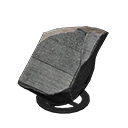
Rosetta Stone
|
Artist unknown |
196 BCE, discovered 1799 |
Granodiorite stele |
British Museum, London |
A stone slab found in Rosetta, Egypt in 1799. Helped efforts to
decipher ancient Egyptian hieroglyphs. Almost identical text is
written in hieroglyphs at the top, then Demotic script, and lastly
Greek script.
|
In the forgery, the Rosetta Stone is colored blue and glows in the
night. If the Rosetta Stone is colored in dull gray, it is genuine.
|
|

|

|

|
|
Motherly statue
|
Capitoline Wolf
|
Unknown (wolf), Antonio del Pollaiuolo (twins) |
c. 5th century BCE |
Bronze |
Capitoline Museums, Rome |
This wolf from Roman mythology raises a pair of twins, along with
some controversy. The original bronze sculpture of the wolf is a
masterpiece that dates back to 5th century BCE. The twins were added
during the 15th century...or so it was thought. Recent research has
given rise to speculation that the original piece may be from the
11th or 12th century. (We will, however, stick with the 5th century
BCE estimate for now.)
|
In the forgery, there is a tongue hanging out of the she-wolf's
mouth. If there is no tongue, it is genuine.
|

|

|

|

|
|
Mystic statue
|
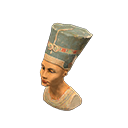
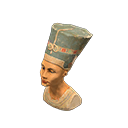
Bust of Nefertiti
|
Thutmose |
c. 1345 BCE, discovered 1912 |
Limestone and stucco |
Neues Museum, Berlin |
A bust of Nefertiti, whose name means "the beautiful one has
come." A "royal wife," she was known as one of the three
most beautiful women in ancient Egypt. It is not known whether the
left eye is missing because it fell out, or because it was never
completed.
|
In the forgery, there is an earring on Nefertiti's right ear. If
there is no earring, it is genuine.
|
|
|

|

|
|
Robust statue
|
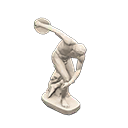
Discobolus
|
Artist unknown |
c. 460—450 BCE, discovered 1781 |
Bronze |
Museo Nazionale Romano, Rome |
This ancient Roman statue is based on the ancient Greek statue
crafted by Myron. It's a piece that shows the grandeur of the
human body, beautiful from any angle.
|
In the forgery, there is a wrist watch on his right wrist. If there
is no watch, it is genuine.
|
|

|

|

|
|
Rock-head statue
|
Olmec colossal heads
|
Artist unknown |
c. 1000 BCE, discovered 1945 |
Basalt |
Museo de Antropología de Xalapa, Xalapa |
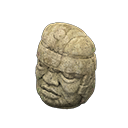
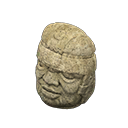
Giant stone head thought to be from the ancient Mesoamerican Olmec
civilization. The larger ones can reach three meters in height.
Scholars think they only crafted heads, no bodies.
|
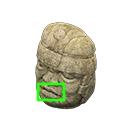
In the forgery, the statue's lips are slightly curled into a
smile. If the lips are more neutral, it is genuine.
|
|
|
|

|
|
Tremendous statue
|
Houmuwu ding
|
Artist unknown |
c. 1200 BCE, discovered 1939 |
Bronze |
National Museum of China, Beijing |
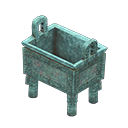
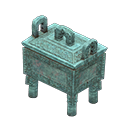
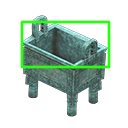
This bronze ding from ancient China is the largest and heaviest ever
found. The script on the inside suggests it was created to honor the
king's mother.
|
In the forgery, there is a lid on the statue. If the top is open, it
is genuine.
|
|
|
|

|
|
Valiant statue
|
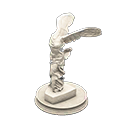
Winged Victory of Samothrace
|
Artist unknown |
c. 200—190 BCE, discovered 1863 |
Parian marble |
Louvre, Paris |
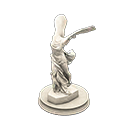
A statue of the goddess of victory, Nike, found on Samothrace. It
shows Nike alighting on the prow of a ship. Originally found in
separate pieces, it has largely been restored, but the arms and head
are still missing.
|
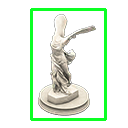
In the forgery, the statue is mirrored, having its left leg in front
and a seemingly smaller right wing. If its right leg in front and
its left wing appears smaller, it is genuine.
|
|
|
|

|
|
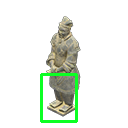
Warrior statue
|
Terracotta Army
|
Artist unknown |
210—209 BC, discovered 1974 |
Terracotta |
Emperor Qinshihuang's Mausoleum Site Museum, Xi'an
|
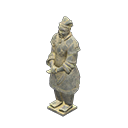
These terracotta warriors were buried with the first Qin emperor to
protect him in the afterlife. Nearly 2,000 years later, in 1974,
about 8,000 of them were found. Each life-sized statue is said to
have been handmade with different poses, expressions, and clothing.
|
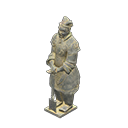
In the forgery, the man is holding a shovel. If there is no shovel,
it is genuine.
|
|
|
|

|